

In the dynamic landscape of the food industry, the demand for food products with intricate and appealing shapes is on the rise. Consumers are not only looking for delicious flavors but also for visually enticing food items that can enhance their dining experience. This has led to a significant interest in food forming machines capable of creating food with complex shapes. As a leading food forming machine supplier, I am excited to delve into this topic and share insights into the capabilities of modern food forming technology.
The Evolution of Food Forming Machines
Food forming machines have come a long way from their humble beginnings. Initially, these machines were primarily designed for simple tasks such as shaping basic food items like burgers and sausages. However, with advancements in technology, manufacturers have been able to develop machines that can create food products with much more complex shapes.
One of the key factors driving this evolution is the development of precision engineering and automation. Modern food forming machines are equipped with advanced sensors, motors, and control systems that allow for highly accurate and consistent shaping of food products. This has enabled manufacturers to produce food items with intricate details and unique shapes that were previously impossible to achieve.
Another important development is the use of innovative materials and manufacturing techniques. For example, some food forming machines now use 3D printing technology to create molds with complex geometries. This allows for the production of food products with highly detailed and customized shapes. Additionally, the use of advanced polymers and other materials in the construction of food forming machines has improved their durability and performance, making them more suitable for industrial applications.
Types of Food Forming Machines for Complex Shapes
There are several types of food forming machines that are capable of creating food with complex shapes. Here are some of the most common ones:
Extrusion Machines
Extrusion machines are widely used in the food industry to create a variety of food products, including pasta, snacks, and breakfast cereals. These machines work by forcing a dough or batter through a die, which gives the food its shape. By using different dies, extrusion machines can create food products with a wide range of shapes, from simple tubes and rods to more complex shapes such as spirals and stars.
Molding Machines
Molding machines are another popular type of food forming machine. These machines use a mold to shape the food product. The mold can be made from a variety of materials, including metal, plastic, and silicone. Molding machines are commonly used to create food products such as chocolates, candies, and cakes. They can also be used to create more complex shapes, such as animal figures and novelty items.
Cutting and Stamping Machines
Cutting and stamping machines are used to cut and shape food products into specific shapes. These machines work by using a blade or a die to cut the food product. By using different blades and dies, cutting and stamping machines can create food products with a wide range of shapes, from simple circles and squares to more complex shapes such as hearts and flowers.
3D Food Printers
3D food printers are a relatively new type of food forming machine that is gaining popularity in the food industry. These machines work by using a digital model to create a three-dimensional food product. The food product is created layer by layer, using a variety of food materials such as dough, batter, and chocolate. 3D food printers can create food products with highly detailed and customized shapes, making them ideal for creating novelty items and personalized food products.
Examples of Food Products with Complex Shapes
There are many examples of food products that are created using food forming machines with complex shapes. Here are some of the most popular ones:
Industrial Burger Making Machine
The Industrial Burger Making Machine is designed to produce burgers with consistent shape and size. These machines can create burgers with complex shapes, such as square, oval, and even custom shapes. They are commonly used in fast food restaurants, burger joints, and food processing plants.
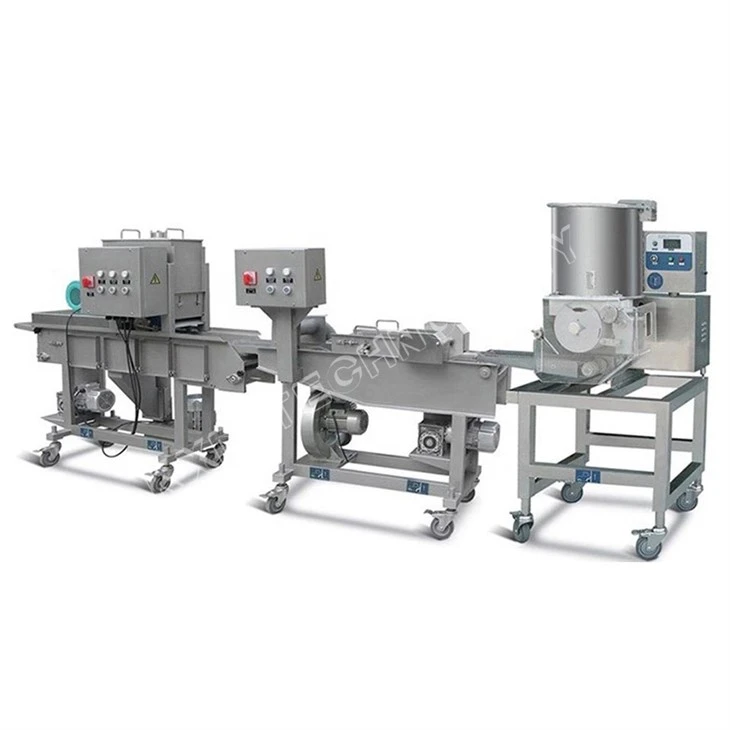

Chicken Nugget Maker Machine
The Chicken Nugget Maker Machine is used to create chicken nuggets with a variety of shapes, including traditional nugget shapes, as well as more complex shapes such as stars and dinosaurs. These machines are widely used in the food industry to produce chicken nuggets for retail and foodservice applications.
Chicken Nuggets Forming Machine
The Chicken Nuggets Forming Machine is specifically designed to form chicken nuggets into their final shape. These machines can create chicken nuggets with precise shapes and sizes, ensuring consistent quality and appearance. They are commonly used in large-scale chicken processing plants.
Chocolate Molds
Chocolate molds are used to create chocolate products with a variety of shapes, including animals, flowers, and holiday-themed shapes. These molds can be made from a variety of materials, including silicone, plastic, and metal. Chocolate molds are commonly used by chocolatiers, bakeries, and home cooks to create unique and visually appealing chocolate products.
Pasta Shapes
Pasta is another food product that can be created with a variety of complex shapes. Extrusion machines are commonly used to create pasta with shapes such as penne, fusilli, and farfalle. These machines use different dies to create the pasta shapes, allowing for a wide range of options.
Benefits of Using Food Forming Machines for Complex Shapes
There are several benefits to using food forming machines for creating food with complex shapes. Here are some of the most important ones:
Increased Productivity
Food forming machines can significantly increase productivity by automating the food shaping process. These machines can produce food products at a much faster rate than manual labor, allowing manufacturers to meet the growing demand for food products with complex shapes.
Consistent Quality
Food forming machines ensure consistent quality by producing food products with the same shape and size every time. This is important for maintaining brand reputation and customer satisfaction. By using food forming machines, manufacturers can ensure that their food products have a uniform appearance and texture, which is essential for consumer acceptance.
Customization
Food forming machines allow for a high degree of customization. Manufacturers can create food products with unique shapes and designs to meet the specific needs and preferences of their customers. This can help to differentiate their products from competitors and increase market share.
Cost Savings
Using food forming machines can result in cost savings in the long run. These machines reduce the need for manual labor, which can be expensive and time-consuming. Additionally, food forming machines can reduce waste by producing food products with precise shapes and sizes, minimizing the amount of excess material.
Challenges and Considerations
While food forming machines offer many benefits, there are also some challenges and considerations to keep in mind. Here are some of the most important ones:
Initial Investment
Food forming machines can be expensive to purchase and install. This can be a significant barrier for small and medium-sized food manufacturers. However, it is important to consider the long-term benefits of using these machines, such as increased productivity and cost savings.
Maintenance and Cleaning
Food forming machines require regular maintenance and cleaning to ensure optimal performance and food safety. This can be time-consuming and costly. Manufacturers need to have a proper maintenance schedule in place and ensure that their employees are trained on how to clean and maintain the machines correctly.
Food Safety
Food safety is a top priority in the food industry. When using food forming machines, it is important to ensure that the machines are designed and constructed in a way that prevents contamination. This includes using food-grade materials, implementing proper sanitation procedures, and ensuring that the machines are easy to clean and maintain.
Technical Expertise
Operating food forming machines requires technical expertise. Manufacturers need to have trained operators who are familiar with the operation and maintenance of these machines. Additionally, manufacturers may need to invest in training programs to ensure that their employees have the necessary skills and knowledge to operate the machines safely and effectively.
Conclusion
In conclusion, there are indeed food forming machines that can make food with complex shapes. These machines have come a long way in recent years, thanks to advancements in technology and innovation. There are several types of food forming machines available, each with its own capabilities and advantages. Using food forming machines for creating food with complex shapes offers many benefits, including increased productivity, consistent quality, customization, and cost savings. However, there are also some challenges and considerations to keep in mind, such as initial investment, maintenance and cleaning, food safety, and technical expertise.
As a food forming machine supplier, we are committed to providing our customers with high-quality machines that can meet their specific needs and requirements. We offer a wide range of food forming machines for creating food with complex shapes, including extrusion machines, molding machines, cutting and stamping machines, and 3D food printers. Our machines are designed and manufactured using the latest technology and materials, ensuring optimal performance and reliability.
If you are interested in learning more about our food forming machines or would like to discuss your specific requirements, please do not hesitate to contact us. We would be happy to assist you in finding the right machine for your business. Let's work together to create delicious and visually appealing food products with complex shapes!
References
- "Food Processing Technology: Principles and Practice" by P. J. Fellows
- "Handbook of Food Engineering" by D. R. Heldman and D. B. Lund
- "Food Manufacturing Technology" by P. S. Richardson