

As a seasoned supplier of retort machines, I've often encountered inquiries from clients about the feasibility of integrating our retort machines with other production lines. This is a crucial question for businesses looking to streamline their manufacturing processes, enhance efficiency, and maximize productivity. In this blog post, I'll delve into the details of whether a retort machine can be integrated with other production lines, the benefits of such integration, and the factors to consider.
Understanding Retort Machines
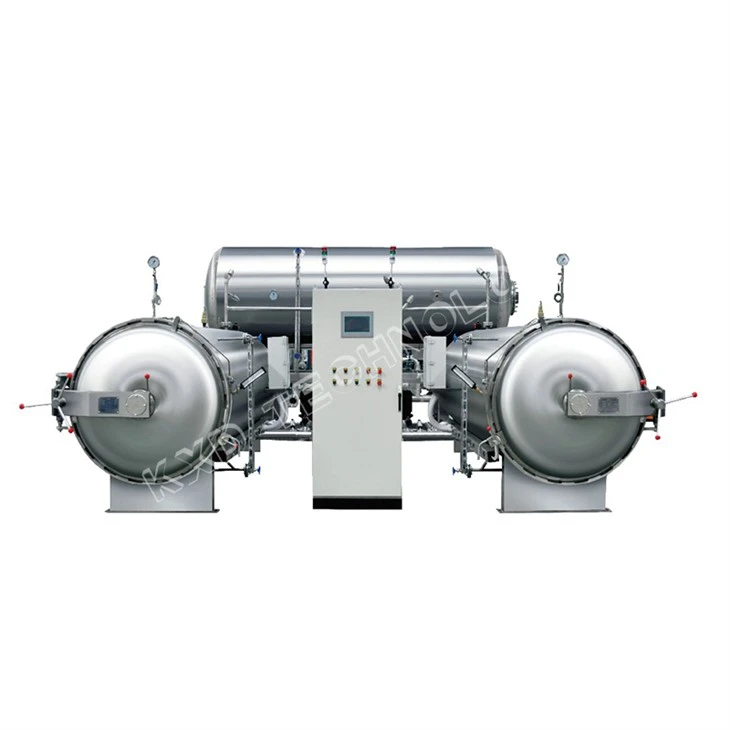
Before we explore integration possibilities, let's briefly understand what retort machines are. Retort machines are essential equipment in the food processing industry, used for thermal processing of food products. They subject food to high temperatures and pressures to eliminate harmful microorganisms, extend shelf life, and maintain product quality. There are different types of retort machines available, such as Steam Retort Machine and Rotary Water Spray Retort, each with its unique features and applications.
Feasibility of Integration
The short answer is yes, a retort machine can be integrated with other production lines. In fact, integration is becoming increasingly common as businesses strive for more efficient and automated manufacturing processes. The key to successful integration lies in careful planning, compatibility assessment, and system design.
Compatibility Assessment
The first step in integrating a retort machine with other production lines is to assess the compatibility of the equipment. This includes evaluating factors such as the production capacity, operating speed, control systems, and communication protocols of the retort machine and other production line components. For example, if the retort machine has a high processing capacity but the upstream or downstream equipment operates at a slower pace, it could lead to bottlenecks and inefficiencies. Similarly, the control systems of the retort machine and other equipment need to be able to communicate effectively to ensure seamless operation.
System Design
Once compatibility is established, the next step is to design an integrated system that meets the specific requirements of the production process. This involves determining the layout of the equipment, the flow of materials, and the integration of control systems. For instance, the retort machine may need to be connected to a conveyor system to receive and discharge products, and the control system may need to be programmed to synchronize the operation of the retort machine with other equipment.
Benefits of Integration
Integrating a retort machine with other production lines offers several benefits for businesses, including:
Increased Efficiency
By integrating the retort machine with other production line components, businesses can eliminate manual handling and transfer of products, reducing the risk of contamination and improving overall efficiency. The automated flow of materials ensures a continuous and smooth production process, minimizing downtime and maximizing throughput.
Improved Product Quality
Integrated production lines allow for better control of the production process, ensuring consistent product quality. The retort machine can be programmed to apply precise temperature and pressure conditions, and the integration of other equipment can help maintain the quality of the product throughout the production process.
Cost Savings
Integration can lead to significant cost savings in the long run. By eliminating the need for manual labor and reducing downtime, businesses can lower their operating costs. Additionally, the improved efficiency and product quality can result in increased sales and customer satisfaction, further enhancing the bottom line.
Enhanced Flexibility
Integrated production lines offer greater flexibility in terms of product customization and production volume. Businesses can easily adjust the production process to meet changing market demands by modifying the settings of the retort machine and other equipment.

Factors to Consider
While the benefits of integrating a retort machine with other production lines are significant, there are several factors that businesses need to consider before embarking on an integration project.
Technical Expertise
Integrating a retort machine with other production lines requires technical expertise in areas such as mechanical engineering, electrical engineering, and automation. Businesses may need to hire experienced engineers or work with a system integrator to ensure the successful implementation of the project.
Investment Costs
Integrating a retort machine with other production lines can be a significant investment. In addition to the cost of the retort machine and other equipment, businesses need to consider the cost of system design, installation, and commissioning. However, the long-term benefits of integration often outweigh the initial investment.
Regulatory Compliance
The food processing industry is subject to strict regulatory requirements, and businesses need to ensure that the integrated production line complies with all relevant regulations. This includes ensuring that the retort machine and other equipment meet the required safety and hygiene standards.
Maintenance and Support
Once the integrated production line is up and running, businesses need to have a maintenance and support plan in place. This includes regular maintenance of the retort machine and other equipment, as well as access to technical support in case of any issues.
Case Studies
To illustrate the benefits of integrating a retort machine with other production lines, let's look at a few case studies.
Case Study 1: A Food Processing Company
A food processing company that produces canned foods decided to integrate a Rotary Water Spray Retort with its existing production line. The integration involved connecting the retort machine to a conveyor system and synchronizing the operation of the retort machine with other equipment. As a result, the company was able to increase its production capacity by 30%, reduce labor costs by 20%, and improve product quality.
Case Study 2: A Beverage Manufacturer
A beverage manufacturer wanted to improve the efficiency of its production process by integrating a Steam Retort Machine with its filling and packaging lines. The integration involved the use of advanced control systems to ensure seamless operation of the equipment. The result was a significant reduction in downtime, improved product quality, and increased customer satisfaction.
Conclusion
In conclusion, a retort machine can be successfully integrated with other production lines, offering numerous benefits for businesses in the food processing industry. However, careful planning, compatibility assessment, and system design are essential to ensure the success of the integration project. By considering the factors discussed in this blog post and learning from real-world case studies, businesses can make informed decisions about integrating a retort machine with their production lines.
If you're interested in exploring the possibility of integrating a retort machine with your production line, I encourage you to contact us for a consultation. Our team of experts can help you assess your needs, design an integrated system, and provide ongoing support to ensure the success of your project.
References
- "Food Processing Technology: Principles and Practice" by P. J. Fellows
- "Thermal Processing of Foods" by M. S. Rahman
- Industry reports and case studies on food processing equipment integration