

Do freeze dryers produce a lot of noise? That's a question I get asked a lot as a freeze dryer supplier. In this blog, I'll share my insights based on years of experience in the industry.
First off, let's understand how freeze dryers work. These machines use a process called lyophilization. It starts by freezing the material, then reducing the pressure and adding heat to make the ice turn directly into vapor, skipping the liquid phase. This process preserves the product's structure, nutrients, and flavor, which is why it's so popular in food, pharmaceutical, and scientific research industries.
Now, back to the noise question. The short answer is that it depends. Different types of freeze dryers can vary quite a bit in terms of how noisy they are.
Factors Affecting Noise Levels
Compressor and Vacuum Pump
The compressor and vacuum pump are the main sources of noise in a freeze dryer. The compressor is responsible for cooling the system to freeze the product, and the vacuum pump creates the low - pressure environment needed for sublimation.
High - quality compressors and pumps are often designed to be quieter. For example, some modern compressors use advanced technology to reduce vibrations and noise. They might have better insulation or more efficient motor designs. On the other hand, cheaper or older models can be quite loud. If you've ever heard an old refrigerator compressor running, you know what I'm talking about. It can be a constant, annoying hum or even a rattling sound.
Size and Design
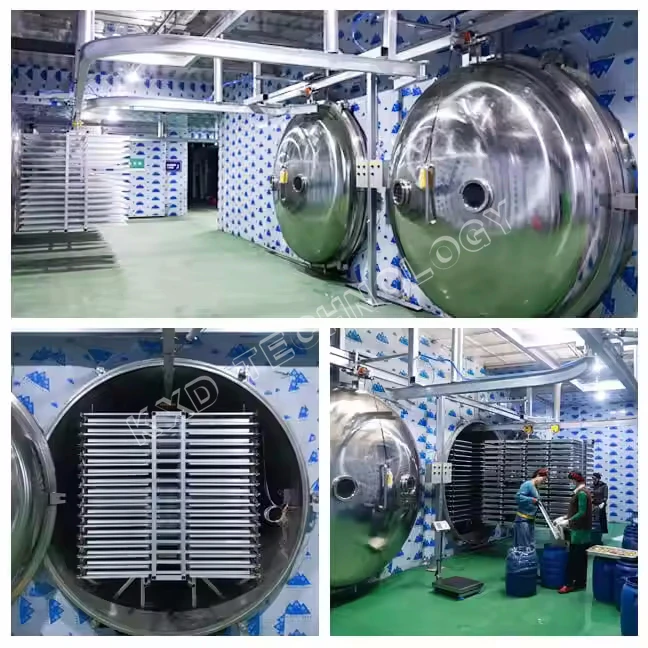
The size of the freeze dryer also matters. Larger industrial - scale freeze dryers tend to be noisier than smaller, benchtop models. This is because they usually have more powerful compressors and pumps to handle larger volumes of material. The design of the machine can also impact noise. Some freeze dryers are built with sound - dampening materials or have a more enclosed structure to keep the noise down.
Usage and Maintenance
How you use and maintain your freeze dryer can affect the noise level. If the machine is overloaded or not properly maintained, it can start to make more noise. For example, if the filters are clogged, the compressor and pump have to work harder, which can increase the noise. Regular maintenance, like cleaning the filters and checking the seals, can help keep the noise at a reasonable level.
Noise Levels of Different Types of Freeze Dryers
Benchtop Freeze Dryers
These are small, usually used in laboratories or for home - scale food preservation. They are generally the quietest type of freeze dryers. Most benchtop models have a noise level similar to a normal conversation, around 40 - 60 decibels. This makes them suitable for use in a quiet office or home environment. You can still have a normal conversation in the same room without being too bothered by the noise.
Industrial Freeze Dryers
Industrial freeze dryers are much larger and more powerful. They are used in large - scale food production, pharmaceutical manufacturing, and other industries. The noise level of industrial freeze dryers can be significantly higher, often ranging from 70 - 90 decibels or more. At these levels, it's equivalent to the noise of a vacuum cleaner or a busy street. You might need to wear ear protection if you're working around these machines for a long time.
Comparing Noise with Other Equipment
When we talk about noise, it's always good to compare freeze dryers with other similar equipment. For example, a traditional oven or a microwave can also make some noise when they're running. An oven might have a fan or a burner that makes a low - level hum, while a microwave can have a buzzing sound from its magnetron.
In general, the noise from a freeze dryer is comparable to or sometimes even lower than other types of industrial or kitchen equipment. It really depends on the specific model and how it's used.
Solutions for Reducing Noise
If the noise from a freeze dryer is a concern for you, there are some solutions.
Sound - Proof Enclosures
You can use a sound - proof enclosure to reduce the noise. These enclosures are made of materials that absorb sound waves. They can be custom - made to fit your freeze dryer. By putting the machine inside a sound - proof box, you can significantly reduce the amount of noise that escapes into the surrounding area.
Location
Where you place the freeze dryer can also make a difference. Putting it in a separate room or a corner of a large space can help. You can also use thick curtains or sound - absorbing panels on the walls to further reduce the noise.

Upgrading Components
If you have an older freeze dryer that's making too much noise, you might consider upgrading the compressor or the vacuum pump. Newer models are often more efficient and quieter.
Our Freeze Dryer Offerings
At our company, we offer a range of freeze dryers to suit different needs. Our Multi - function Vacuum Freeze Dryer Machine is a great option for those who need a versatile machine. It has a modern design with advanced noise - reduction features. The compressor and vacuum pump are carefully selected to ensure a quiet operation.
For those in the food industry, our Food Vacuum Freeze Dryer is a top - choice. It's designed to handle large volumes of food while keeping the noise at a reasonable level. We understand that noise can be a concern in a food production environment, so we've made sure to optimize the design for quiet operation.
Conclusion
So, do freeze dryers produce a lot of noise? It's not a one - size - fits - all answer. While some freeze dryers can be noisy, especially industrial models, there are many options available that are relatively quiet. By choosing the right model, maintaining it properly, and using noise - reduction solutions, you can minimize the impact of noise.
If you're interested in learning more about our freeze dryers or have any questions about noise levels, feel free to reach out. We're here to help you find the perfect freeze dryer for your needs. Whether you're a small - scale food producer or a large pharmaceutical company, we have the expertise and the products to meet your requirements. Contact us today to start the conversation about your freeze - drying needs.
References
- "Lyophilization: Principles and Practices" by John W. Carpenter and Maria C. Manning
- "Food Freeze - Drying Technology" by Y.H. Hui and M.M. Sablani