

Hey there! As a supplier of Tempura Battering Machines, I've got a lot to share about how these nifty gadgets perform in cold environments. You see, a Tempura Battering Machine is a game - changer in the food industry, especially for places that serve tempura - style dishes. But when the mercury drops, things can get a bit tricky.
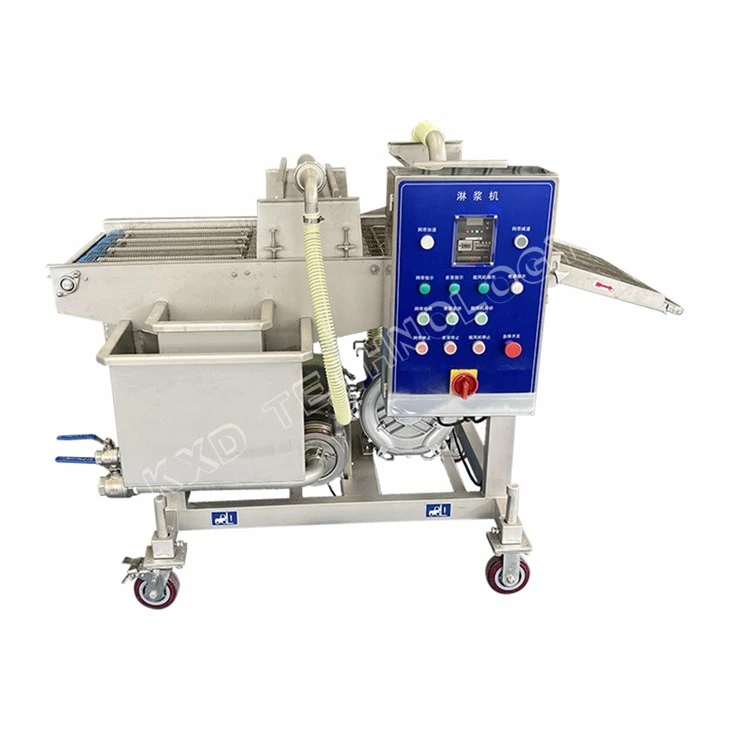
First off, let's talk about the components of a Tempura Battering Machine. These machines usually have a hopper for holding the batter, a conveyor system to move the food through the batter, and a mechanism to control the amount of batter applied. In a cold environment, each of these parts can be affected in different ways.
The hopper is where the batter is stored. Batter is a mixture of flour, water, and sometimes other ingredients like eggs or seasonings. In cold temperatures, the batter can thicken up. You know how honey gets all sticky and slow - moving when it's cold? Well, batter can act in a similar way. This thickening can cause problems with the flow of the batter from the hopper to the conveyor. If the batter doesn't flow smoothly, it won't coat the food evenly. You might end up with some parts of the food being over - battered while others are barely covered at all.
The conveyor system is another crucial part. It's made up of belts and rollers that move the food through the batter. Cold temperatures can make the belts and rollers more rigid. They might not move as freely as they should, which can lead to jams or uneven movement of the food. If the food isn't moving at a consistent speed through the batter, the coating will be inconsistent too. And let's face it, in the food business, consistency is key. Customers expect the same great - looking and great - tasting tempura every time they order.
The mechanism that controls the amount of batter applied can also be affected by the cold. In cold conditions, the sensors and valves that regulate the batter flow might not work as accurately. This can result in either too much or too little batter being applied to the food. Too much batter and the tempura will be heavy and greasy; too little, and it won't have that nice crispy outer layer that we all love.
Now, let's look at some solutions to these problems. One option is to keep the machine in a heated area. This might seem obvious, but it's often overlooked. If you can keep the temperature around the machine at a reasonable level, say around room temperature (about 20 - 25 degrees Celsius), the batter will stay at the right consistency, and the conveyor and control mechanisms will work as they should.
Another solution is to use a batter with additives that help it stay fluid in cold temperatures. There are some special ingredients that can be added to the batter to prevent it from thickening too much. These additives can be a real lifesaver in cold environments. However, you need to make sure that these additives don't affect the taste or quality of the tempura.
Regular maintenance is also super important. In cold weather, you should check the machine more frequently. Lubricate the moving parts to keep them from seizing up. Make sure the belts are properly tensioned and the rollers are clean. A well - maintained machine is more likely to perform well, even in cold conditions.
When it comes to the performance of a Tempura Battering Machine in cold environments, it's not all doom and gloom. With the right precautions and maintenance, these machines can still produce high - quality tempura. And let's not forget about the versatility of these machines. They can be used for more than just tempura. You can also use them to coat chicken, fish, or other foods. For example, if you're interested in coating chicken, you might want to check out our Chicken Battering Breading Machine. It's a great option for those looking to expand their menu.
Our Batter Breading Machine is another great choice. It can handle a variety of batters and breadings, giving you more options in your food preparation. And if you're running a commercial kitchen, our Crumbing And Battering Machine Commercial Battering Machine is designed to meet the high - volume demands of a busy restaurant or food production facility.
So, if you're in the food business and are thinking about investing in a Tempura Battering Machine, don't let the cold weather scare you off. With a bit of knowledge and some proactive measures, you can ensure that your machine performs well even in cold environments. Whether you're a small diner or a large - scale food manufacturer, our machines are built to last and to help you create delicious, consistent tempura and other battered foods.
If you're interested in learning more about our Tempura Battering Machines or have any questions about how they perform in different conditions, we'd love to hear from you. Contact us to start a conversation about how we can meet your specific needs and help you take your food business to the next level.

References
- Food Processing Machinery Handbook: This handbook provides in - depth information about the components and operation of food battering machines.
- Studies on the Effects of Temperature on Food Batters: These research papers explore how temperature affects the viscosity and flow properties of different types of batters.