

Hey there! As a supplier of Food Vacuum Freeze Dryer, I often get asked about the maximum thickness of food that can be dried in a food vacuum freeze dryer. It's a crucial question because the thickness of the food can significantly impact the drying process and the final quality of the freeze - dried product.
Let's start by understanding how a food vacuum freeze dryer works. In simple terms, the process involves freezing the food first, then reducing the pressure in the drying chamber to create a vacuum. Under these low - pressure conditions, the frozen water in the food sublimates, which means it changes directly from a solid (ice) to a gas (vapor) without passing through the liquid phase. This way, we can preserve the nutritional value, flavor, and shape of the food.
Now, back to the thickness issue. There isn't a one - size - fits - all answer to the maximum thickness of food for freeze - drying. It depends on several factors.
1. Type of Food
Different foods have different compositions, and this affects how they freeze and dry. For example, fruits like strawberries or bananas have a relatively high water content. When it comes to these soft fruits, a thickness of around 10 - 15 mm is usually a good starting point. Thicker slices may take a much longer time to freeze completely and then to dry. The ice crystals inside the thicker slices are larger, and it takes more energy and time for the sublimation process to remove all the water.
On the other hand, meats and vegetables can tolerate slightly greater thickness. Meats, especially lean ones, can be dried at a thickness of up to 20 mm. Vegetables like carrots or potatoes can also handle a similar thickness. This is because their cellular structures are denser, and they have a more organized fiber network that can support the drying process at a greater thickness.
2. Freeze - Drying Equipment
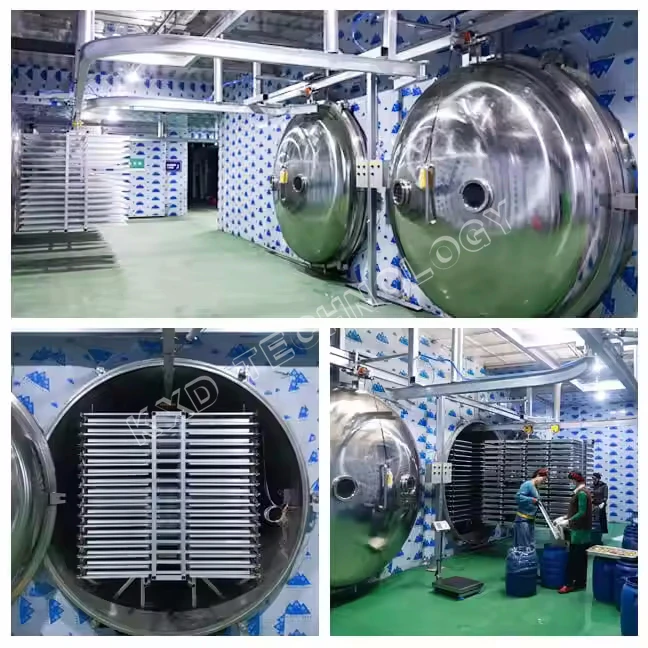
The capabilities of your Food Vacuum Freeze Dryer play a huge role. High - end models, such as our Multi - function Vacuum Freeze Dryer Machine, are designed to handle thicker food slices more efficiently. These machines have powerful refrigeration systems that can quickly freeze the food, even at greater thicknesses. They also have advanced vacuum pumps that can maintain a stable vacuum environment, which is essential for the sublimation process.
For instance, if you have a basic freeze dryer with limited cooling capacity, trying to dry thick food slices will be a long and inefficient process. The machine may struggle to freeze the center of the thick slices properly, leading to uneven drying and potentially spoiling the product.
3. Drying Time
Thicker food slices naturally require more time to dry. If you're in a hurry to get your products out, you'll need to keep the thickness down. But if time isn't a constraint, you can experiment with slightly thicker slices. However, it's important to note that extremely long drying times can also have a negative impact on the quality of the food. Extended exposure to the freeze - drying environment can cause some nutrient loss and may affect the texture of the final product.
Let's say you're drying apples. If you cut them into 5 - mm slices, they might dry in 12 - 15 hours. But if you increase the thickness to 20 mm, the drying time could easily double or even triple. During this long drying period, there's a risk of oxidation and other chemical reactions that can change the flavor and color of the apples.
4. Quality Requirements
Your end - use for the freeze - dried food also matters. If you're aiming for a high - end product with maximum nutritional value and a perfect texture, you'll probably want to keep the food thickness on the thinner side. Thinner slices dry more evenly, resulting in a product that rehydrates quickly and retains its original flavor and texture.
For example, if you're making freeze - dried food for astronauts or for high - end restaurants, you can't afford to have any inconsistencies in the product. In these cases, a thickness of 8 - 12 mm is often ideal. But if you're producing freeze - dried food for animal feed or for use in industrial food processing, where the quality requirements are a bit more relaxed, you can get away with thicker slices.

General Guidelines
Based on my experience as a supplier, here are some general guidelines for the maximum thickness of different types of food in a food vacuum freeze dryer:
- Fruits: 10 - 15 mm for most soft fruits. Berries can be a bit thinner, around 8 - 10 mm, while harder fruits like apples or pears can go up to 15 mm.
- Vegetables: 15 - 20 mm. Root vegetables like beets or turnips can handle the upper end of this range, while leafy vegetables should be kept thinner, around 10 - 12 mm.
- Meats: 15 - 20 mm. Lean meats can be at the thicker end, while fatty meats may need to be a bit thinner to ensure proper drying.
It's always a good idea to do some small - scale tests with your specific food and equipment. Start with a range of thicknesses and observe the drying time, quality of the final product, and energy consumption. This way, you can find the optimal thickness for your particular situation.
In conclusion, the maximum thickness of food that can be dried in a food vacuum freeze dryer is a complex issue that depends on multiple factors. By considering the type of food, your equipment, drying time, and quality requirements, you can make an informed decision about the thickness of your food slices.
If you're in the market for a reliable Food Vacuum Freeze Dryer or want to learn more about how to optimize your freeze - drying process, don't hesitate to reach out. We're here to help you get the best results from your freeze - drying operations. Whether you're a small - scale food producer or a large - scale industrial operation, we have the right solutions for you.
References
- "Principles of Food Freeze - Drying" by various authors in the Journal of Food Science.
- "Advances in Vacuum Freeze - Drying Technology" from the International Journal of Food Engineering.