

As a supplier of batter breading machines, I often get asked whether these machines can be used with different types of breading materials. This is a crucial question for businesses in the food industry, as the ability to use various breading materials can significantly expand the product range and cater to diverse customer preferences. In this blog post, I'll delve into this topic, exploring the compatibility of batter breading machines with different breading materials and providing insights based on our experience in the market.
Understanding Batter Breading Machines
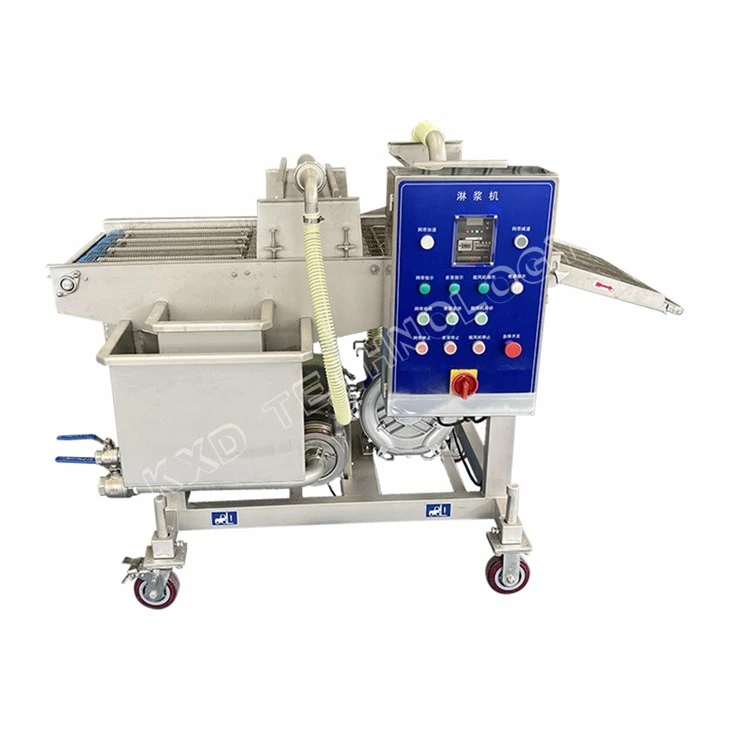
Before we discuss the compatibility with different breading materials, let's briefly understand what a batter breading machine is. A batter breading machine is a specialized piece of equipment designed to coat food products with batter and breading. It typically consists of a batter tank, a conveyor system, and a breading applicator. The food products are first dipped into the batter, which adheres to the surface, and then passed through the breading applicator, where the breading material is evenly distributed over the batter-coated product.
Our company offers a range of batter breading machines, including the Automatic Batter Breading Machine Chicken Battering Breading Machine, the Batter And Breading Machine Breadcrumb Coating Machine Onion Ring Breading Machine, and the Batter Breading Machine. These machines are designed to provide efficient and consistent coating for a variety of food products, such as chicken, onion rings, fish, and more.
Compatibility with Different Breading Materials
One of the key advantages of our batter breading machines is their versatility in handling different types of breading materials. Here are some common breading materials and how our machines can work with them:
Breadcrumbs
Breadcrumbs are one of the most widely used breading materials in the food industry. They come in various sizes, from fine to coarse, and can be made from different types of bread, such as white bread, whole wheat bread, or rye bread. Our batter breading machines are designed to handle breadcrumbs of different sizes and textures. The breading applicator can be adjusted to ensure an even distribution of breadcrumbs over the batter-coated product, resulting in a crispy and flavorful coating.
Panko
Panko is a type of Japanese breadcrumb that is coarser and lighter than traditional breadcrumbs. It has a flakier texture and provides a crispy outer layer when used as a breading material. Our machines can easily handle panko, as the breading applicator is designed to apply the panko evenly without crushing it. This allows for a consistent and professional-looking coating on the food products.
Cornmeal
Cornmeal is another popular breading material, especially for Southern-style dishes. It has a slightly sweet and nutty flavor and provides a crunchy coating. Our batter breading machines can work with cornmeal, ensuring that it adheres well to the batter-coated product. The machine's conveyor system and breading applicator are designed to prevent the cornmeal from clumping and ensure an even distribution.
Seasoned Breading Mixes
Many food manufacturers use seasoned breading mixes that contain a combination of breadcrumbs, spices, and other flavorings. These mixes can add a unique and delicious flavor to the food products. Our batter breading machines can handle seasoned breading mixes just as well as plain breading materials. The machine's design allows for the proper mixing and application of the seasoned breading, ensuring that the flavors are evenly distributed throughout the coating.
Gluten-Free Breading Alternatives
With the increasing demand for gluten-free food products, there has been a rise in the use of gluten-free breading alternatives, such as rice flour, tapioca flour, and chickpea flour. Our batter breading machines are compatible with these gluten-free breading materials. The machine's components are made from materials that are resistant to corrosion and can handle different types of flours without clogging or sticking. This allows food manufacturers to offer gluten-free options to their customers without compromising on the quality of the coating.
Factors Affecting Compatibility
While our batter breading machines are designed to be compatible with a wide range of breading materials, there are some factors that can affect the performance and compatibility. Here are some key factors to consider:
Breading Material Consistency
The consistency of the breading material can have a significant impact on the coating process. Breading materials that are too fine or too powdery may not adhere well to the batter-coated product, while materials that are too coarse or sticky may clump together and cause uneven coating. It is important to choose breading materials with the right consistency for the specific application and adjust the machine settings accordingly.
Machine Settings
The settings of the batter breading machine, such as the speed of the conveyor system, the thickness of the batter, and the amount of breading applied, can also affect the compatibility with different breading materials. For example, if the conveyor speed is too fast, the breading material may not have enough time to adhere to the batter-coated product. On the other hand, if the conveyor speed is too slow, the breading material may build up and cause uneven coating. It is important to optimize the machine settings based on the type of breading material and the food product being coated.
Cleaning and Maintenance
Regular cleaning and maintenance of the batter breading machine are essential to ensure its optimal performance and compatibility with different breading materials. Breading materials can accumulate in the machine's components, such as the batter tank, the conveyor system, and the breading applicator, over time. This can affect the machine's functionality and lead to uneven coating. It is important to follow the manufacturer's cleaning and maintenance instructions to keep the machine in good working condition.
Benefits of Using Different Breading Materials
Using different breading materials in a batter breading machine offers several benefits for food manufacturers. Here are some of the key advantages:
Product Differentiation
By using different breading materials, food manufacturers can create unique and differentiated products that stand out in the market. For example, a chicken nugget coated with panko will have a different texture and flavor compared to a chicken nugget coated with traditional breadcrumbs. This allows manufacturers to offer a wider range of products to meet the diverse preferences of consumers.
Flavor Enhancement
Different breading materials can add a variety of flavors to the food products. Seasoned breading mixes, for example, can provide a burst of flavor that complements the taste of the food. Using different types of breading materials also allows manufacturers to experiment with different flavor combinations and create new and exciting products.
Market Expansion
The ability to use different breading materials can help food manufacturers expand their market reach. By offering gluten-free or other specialty breading options, manufacturers can cater to the needs of consumers with specific dietary requirements. This can open up new market segments and increase the customer base.
Conclusion
In conclusion, our batter breading machines are designed to be compatible with a wide range of breading materials, including breadcrumbs, panko, cornmeal, seasoned breading mixes, and gluten-free alternatives. The machines' versatility allows food manufacturers to create unique and differentiated products, enhance the flavor of their food, and expand their market reach. However, it is important to consider factors such as breading material consistency, machine settings, and cleaning and maintenance to ensure optimal performance and compatibility.

If you are interested in learning more about our batter breading machines or discussing your specific requirements, please feel free to contact us. We would be happy to provide you with more information and assist you in finding the right machine for your business.
References
- "Food Coating Technology: Principles and Applications" by S. S. H. Rizvi
- "Handbook of Food Processing Equipment" by Gustavo V. Barbosa-Cánovas, Jorge Welti-Chanes, and Mario R. Góngora-Nieto