

Can a freeze dryer be used for ceramics? This is a question that has piqued the interest of many in the ceramics industry and among those exploring innovative drying methods. As a supplier of freeze dryers, I've delved deep into this topic, and in this blog, I'll share my insights on whether freeze dryers can be effectively used for ceramics.
Understanding Freeze Dryers
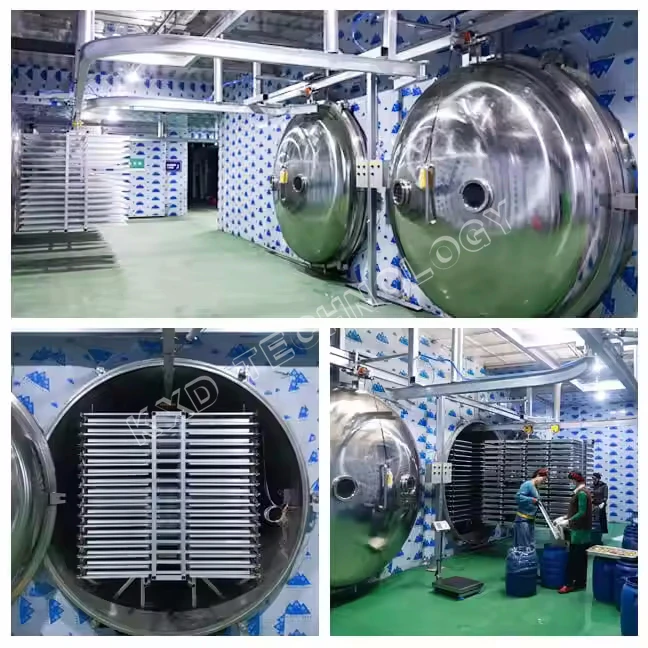
Before we dive into the application of freeze dryers in ceramics, let's first understand what a freeze dryer is. A freeze dryer, also known as a lyophilizer, operates on the principle of sublimation. Sublimation is the process where a substance changes directly from a solid to a gas without passing through the liquid phase. In a freeze dryer, the material to be dried is first frozen, and then a vacuum is applied. This low-pressure environment allows the frozen water (or other solvents) in the material to sublimate, leaving behind a dry product.
There are different types of freeze dryers available in the market. For instance, the Food Vacuum Freeze Dryer is specifically designed for preserving food items by removing moisture while maintaining their nutritional value, flavor, and texture. On the other hand, the Multi-function Vacuum Freeze Dryer Machine offers more versatility and can be used for a wide range of applications beyond just food.
Traditional Drying Methods in Ceramics
In the ceramics industry, traditional drying methods have been the norm for centuries. Air drying is one of the most common methods, where the ceramic pieces are left in a well - ventilated area to dry naturally. This process is slow, often taking days or even weeks depending on the size and thickness of the pieces. Another method is kiln drying, which involves placing the ceramics in a kiln at a controlled temperature. Kiln drying is faster than air drying but requires careful temperature control to prevent cracking or warping of the ceramic pieces.
These traditional methods have their limitations. Air drying is highly dependent on environmental conditions such as humidity and temperature, which can lead to uneven drying and defects in the final product. Kiln drying, while faster, consumes a significant amount of energy and can be costly to operate.
Potential Benefits of Using a Freeze Dryer for Ceramics
Now, let's explore the potential benefits of using a freeze dryer for ceramics.

Uniform Drying
One of the main advantages of freeze drying is its ability to provide uniform drying. Since the sublimation process occurs throughout the entire frozen material, the moisture is removed evenly from all parts of the ceramic piece. This can help reduce the risk of cracking and warping that are often associated with uneven drying in traditional methods.
Preservation of Structure
Freeze drying can also help preserve the delicate structure of the ceramic material. The low - temperature process minimizes thermal stress on the ceramics, which is especially important for intricate or fragile pieces. This can result in a higher - quality final product with better - defined details.
Energy Efficiency
Compared to kiln drying, freeze drying can be more energy - efficient. While the initial investment in a freeze dryer may be higher, the overall energy consumption during the drying process can be lower, especially for small - to - medium - sized ceramic production.
Challenges of Using a Freeze Dryer for Ceramics
Despite the potential benefits, there are also several challenges associated with using a freeze dryer for ceramics.
Cost
As mentioned earlier, the initial cost of purchasing a freeze dryer can be quite high. In addition to the equipment cost, there are also ongoing costs such as maintenance, electricity, and the cost of consumables like refrigerants. This can make it a less attractive option for small - scale ceramic producers with limited budgets.
Processing Time
Although freeze drying can provide uniform drying, the process can be relatively slow compared to some traditional methods. The freezing step alone can take several hours, and the sublimation process also requires a significant amount of time. This can be a drawback for high - volume ceramic production where speed is of the essence.
Material Compatibility
Not all ceramic materials may be suitable for freeze drying. Some ceramics may contain additives or binders that can affect the sublimation process or cause issues during the drying. Additionally, the porosity of the ceramic material can also impact the efficiency of the freeze - drying process.
Case Studies and Research
There have been some studies and case studies exploring the use of freeze dryers in ceramics. Some research has shown promising results in terms of improving the quality of the final ceramic product. For example, in a study on small - scale ceramic sculptures, freeze drying was found to reduce the occurrence of cracks and improve the overall surface finish. However, more research is needed to fully understand the potential of freeze drying in different types of ceramic applications and to develop best practices for its use.
Conclusion
So, can a freeze dryer be used for ceramics? The answer is yes, but with some caveats. While there are clear potential benefits in terms of uniform drying, preservation of structure, and energy efficiency, there are also significant challenges such as cost, processing time, and material compatibility.
For large - scale ceramic producers with the budget and a need for high - quality, uniform products, a freeze dryer could be a viable option. Small - scale producers may need to carefully weigh the costs and benefits before investing in this technology.
If you're interested in exploring the use of freeze dryers for your ceramic production, I encourage you to reach out to me. As a freeze - dryer supplier, I can provide you with more detailed information about our products, their capabilities, and how they can be tailored to your specific needs. Whether you're looking for a Food Vacuum Freeze Dryer or a Multi - function Vacuum Freeze Dryer Machine, I'm here to assist you in making an informed decision. Contact me to start a discussion about your requirements and how we can work together to improve your ceramic drying process.
References
- "Drying Technologies in the Ceramic Industry" - Journal of Ceramic Science and Technology
- "The Principles and Applications of Freeze Drying" - International Journal of Lyophilization
- Case studies on freeze drying in ceramics from industry research reports.