

As a supplier of spring roll pastry machines, I've encountered numerous inquiries from customers aiming to enhance the smoothness of spring roll pastries produced by our machines. Achieving a smooth texture is crucial for the overall quality and appeal of spring rolls, as it not only improves the visual appearance but also enhances the eating experience. In this blog, I'll share some practical tips and strategies to help you improve the smoothness of spring roll pastries made by our machines.
Understanding the Key Factors Affecting Smoothness
Before delving into the specific methods to improve smoothness, it's essential to understand the key factors that influence the texture of spring roll pastries. These factors include the quality of the dough, the settings of the machine, and the operating techniques.
Dough Quality
The quality of the dough is the foundation for smooth spring roll pastries. The flour type, water content, and mixing process all play significant roles in determining the dough's texture. For instance, using high - quality wheat flour with the right protein content can result in a more elastic and smooth dough. Additionally, achieving the proper water - flour ratio is crucial; too much water can make the dough too sticky, while too little water can lead to a dry and rough texture.
Machine Settings
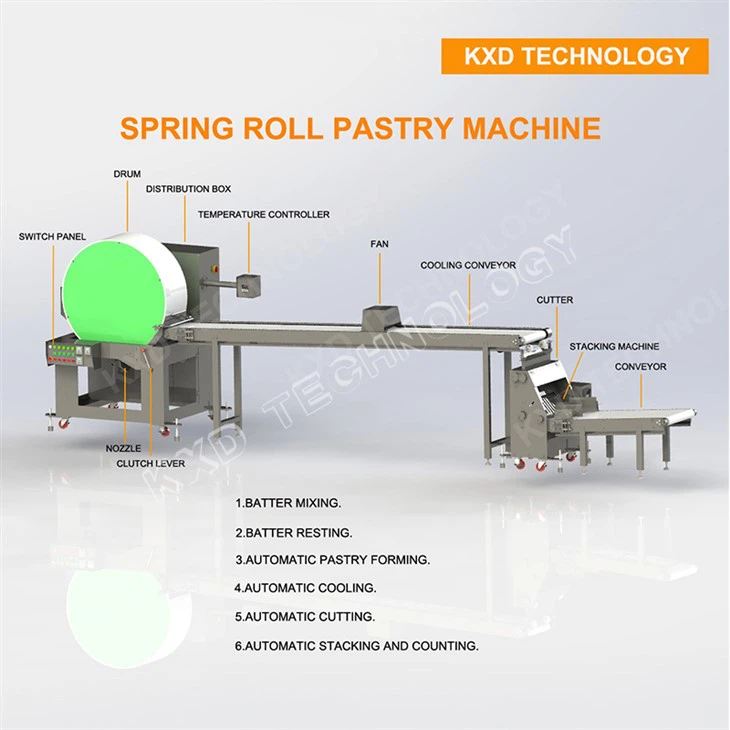
The settings of the spring roll pastry machine also have a direct impact on the smoothness of the pastries. Parameters such as the temperature of the heating plate, the speed of the conveyor belt, and the thickness adjustment of the pastries need to be carefully calibrated. Incorrect settings can cause uneven heating, tearing, or uneven thickness of the pastries, all of which affect the smoothness.
Operating Techniques
Proper operating techniques are essential for ensuring the smoothness of spring roll pastries. This includes evenly spreading the dough on the machine, maintaining a consistent feeding speed, and handling the pastries gently during the production process. Any sudden movements or improper handling can cause the pastries to become uneven or develop cracks.
Tips for Improving Dough Quality
Select the Right Flour
Choosing the appropriate flour is the first step in creating smooth spring roll pastries. Generally, medium - gluten wheat flour is a good choice as it provides a balance between elasticity and tenderness. High - gluten flour may result in a tough texture, while low - gluten flour may produce pastries that are too soft and lack structure.
Optimize the Water - Flour Ratio
Experiment with different water - flour ratios to find the optimal combination for your desired texture. A general guideline is to start with about 60 - 70% water by weight of the flour. However, this ratio may vary depending on the type of flour, environmental conditions (such as humidity), and personal preferences. It's recommended to make small batches and adjust the ratio accordingly until you achieve the desired consistency.
Mix the Dough Properly
Proper dough mixing is crucial for achieving a smooth and homogeneous texture. Use a mixer or a food processor to mix the flour and water thoroughly. Start by adding the water gradually while the mixer is running to ensure even distribution. Mix the dough for an appropriate amount of time; over - mixing can cause the dough to become tough, while under - mixing can result in lumps and an uneven texture. After mixing, let the dough rest for about 30 minutes to allow the gluten to relax and the dough to become more elastic.
Adjusting Machine Settings
Temperature Control
The temperature of the heating plate is one of the most critical factors affecting the smoothness of spring roll pastries. If the temperature is too low, the pastries may not cook properly and will be sticky. On the other hand, if the temperature is too high, the pastries may burn or develop a hard crust. It's recommended to start with a medium temperature and adjust it based on the performance of the machine and the quality of the pastries. For most spring roll pastry machines, a temperature range of 150 - 200°C is suitable.
Conveyor Belt Speed
The speed of the conveyor belt determines how long the dough stays on the heating plate. A slower speed allows the pastries to cook more thoroughly, but it may also increase the risk of over - cooking. A faster speed can prevent over - cooking but may result in under - cooked pastries. Find the right balance by adjusting the conveyor belt speed according to the thickness of the pastries and the temperature of the heating plate.
Thickness Adjustment
Properly adjusting the thickness of the spring roll pastries is essential for achieving a smooth texture. If the pastries are too thick, they may not cook evenly and will have a tough center. If they are too thin, they may tear easily. Use the thickness adjustment feature of the machine to set the desired thickness, usually between 0.5 - 2 mm depending on your preference.

Proper Operating Techniques
Even Dough Spreading
When feeding the dough into the machine, make sure to spread it evenly on the conveyor belt or the feeding area. Uneven dough distribution can lead to uneven thickness and texture of the pastries. You can use a spatula or a similar tool to spread the dough gently and ensure a consistent layer.
Consistent Feeding Speed
Maintain a consistent feeding speed to ensure a continuous and uniform production process. Sudden changes in the feeding speed can cause the pastries to have irregular shapes or thickness. Train your operators to feed the dough at a steady pace to achieve the best results.
Gentle Handling
Handle the spring roll pastries gently during the production process to avoid damaging their smooth surface. Use clean and dry hands or appropriate tools to transfer the pastries from the machine to the storage or packaging area. Any rough handling can cause the pastries to develop cracks or wrinkles.
Utilizing Our Machines' Features
Our company offers a range of high - quality spring roll pastry machines, including the Spring Roll Sheet Making Machine, Spring Roll Production Line, and Spring Roll Skin Machine. These machines are designed with advanced technology and features to help you achieve smooth and high - quality spring roll pastries.
For example, our machines are equipped with precise temperature control systems, which ensure even heating and prevent over - or under - cooking. The adjustable conveyor belt speed allows you to customize the production process according to your specific needs. Additionally, the thickness adjustment function enables you to produce pastries of different thicknesses with high precision.
Conclusion
Improving the smoothness of spring roll pastries made by our machines requires a combination of proper dough preparation, accurate machine settings, and correct operating techniques. By following the tips and strategies outlined in this blog, you can significantly enhance the quality of your spring roll pastries and meet the high standards of your customers.
If you're interested in our spring roll pastry machines or need further assistance in improving the smoothness of your spring roll pastries, please feel free to contact us for more information and a detailed discussion. We're committed to providing you with the best solutions and support to help you succeed in your spring roll production business.
References
- "Food Science and Technology" by Fennema, O. R.
- "Baking Science and Technology" by Hoseney, R. C.