

Storing a spring roll production line properly when it's not in use is crucial to maintain its performance, extend its lifespan, and ensure its readiness for future production runs. As a supplier of spring roll production lines, I understand the importance of this process and am here to share some professional advice on how to store your equipment effectively.
1. Pre - storage Cleaning
Before storing the spring roll production line, a thorough cleaning is essential. Any leftover food particles, grease, or debris can attract pests, cause corrosion, and damage the machine's components over time.
- Disassembly: Start by disassembling the parts that are detachable, such as conveyor belts, rollers, and cutting blades. Refer to the user manual for the correct disassembly procedure to avoid any damage. For example, the Spring Roll Skin Machine may have specific components that need to be carefully removed.
- Washing: Use a mild detergent and warm water to clean the disassembled parts. Scrub gently to remove stubborn stains, but be careful not to scratch the surfaces. For parts that are sensitive to water, use a dry - cleaning method or a specialized cleaning agent recommended by the manufacturer.
- Rinsing and Drying: After washing, rinse all parts thoroughly to remove any detergent residue. Then, dry them completely using a clean cloth or air - drying. Moisture can lead to rust formation, so ensuring complete dryness is vital.
2. Lubrication
Lubrication helps to prevent friction and wear between moving parts during storage. It also protects the metal surfaces from corrosion.

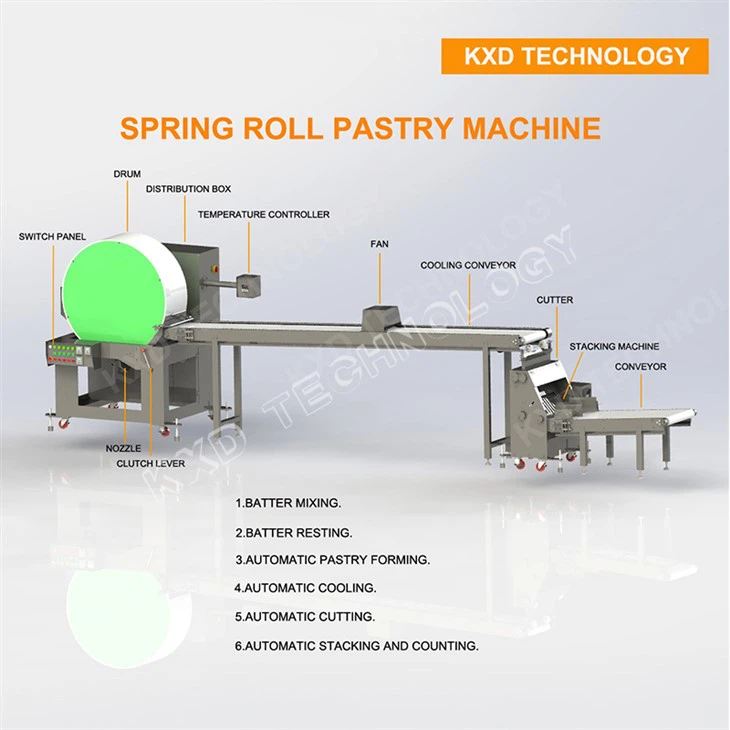
- Identify Lubrication Points: Consult the machine's manual to find out the specific lubrication points. These usually include bearings, gears, and chains.
- Choose the Right Lubricant: Select a high - quality lubricant suitable for the materials and operating conditions of the spring roll production line. Apply the lubricant evenly to the designated points according to the recommended amount. For instance, the Spring Roll Machine Spring Roll Production Line With CE Certificate may require a specific type of lubricant for its different components.
3. Protection Against Corrosion
Corrosion can significantly damage the metal parts of the spring roll production line, reducing its efficiency and lifespan.
- Coating: Apply a thin layer of anti - corrosion coating to the metal surfaces. This can be a specialized spray or a wax - based product. Make sure to cover all exposed metal areas, including frames, pipes, and fasteners.
- Humidity Control: Store the production line in a dry environment. High humidity can accelerate corrosion. If possible, use a dehumidifier in the storage area to maintain a relative humidity level below 50%.
4. Storage Location
The choice of storage location plays a vital role in protecting the spring roll production line.
- Indoor Storage: It is highly recommended to store the equipment indoors to protect it from the elements. An indoor storage facility can shield the machine from rain, snow, sunlight, and extreme temperature changes.
- Clean and Dust - free Environment: The storage area should be clean and free of dust. Dust can accumulate on the machine's components and cause abrasion or clogging. Regularly clean the storage area to keep it in good condition.
- Stable Surface: Place the production line on a stable and level surface. Uneven surfaces can cause stress on the machine's structure, leading to potential damage.
5. Covering the Equipment
Using a suitable cover can provide an additional layer of protection for the spring roll production line.
- Custom - made Covers: Consider using custom - made covers that fit the shape and size of your production line. These covers are usually made of durable materials such as heavy - duty plastic or canvas, which can effectively protect the machine from dust, dirt, and minor impacts.
- Secure the Cover: Make sure the cover is securely fastened to prevent it from being blown off or shifted during storage.
6. Documentation and Inventory
Proper documentation and inventory management are important for easy retrieval and maintenance of the spring roll production line.
- Record Keeping: Keep a detailed record of the storage process, including the date of storage, the condition of the equipment at the time of storage, and any maintenance or cleaning procedures performed. This information can be useful when it's time to retrieve and reinstall the machine.
- Inventory List: Create an inventory list of all the parts and components of the production line. This will help you ensure that nothing is missing when you take the machine out of storage.
7. Regular Inspections
Even during storage, it's important to conduct regular inspections of the spring roll production line.
- Frequency: Inspect the equipment at least once every few months. This will allow you to detect any potential issues early, such as signs of corrosion, pest infestation, or damage to the cover.
- Check for Damage: During the inspection, carefully examine all parts of the machine for any signs of damage or wear. If any issues are found, address them immediately to prevent further deterioration.
8. Recommissioning
When it's time to use the spring roll production line again, proper recommissioning is necessary.
- Inspection and Cleaning: Before starting the machine, conduct a final inspection to ensure that everything is in good condition. Clean the equipment again to remove any dust or debris that may have accumulated during storage.
- Lubrication Check: Check the lubrication levels and re - apply lubricant if necessary.
- Test Run: Perform a test run of the production line to ensure that all components are functioning properly. Make any necessary adjustments or repairs before starting full - scale production.
In conclusion, proper storage of a spring roll production line is a comprehensive process that requires attention to detail. By following these steps, you can ensure that your equipment remains in good condition and is ready for efficient production when needed. If you are in the market for a high - quality spring roll production line, our Spring Roll Sheet Making Machine and other related products are designed to meet your production needs. We are always ready to provide professional advice and support for your spring roll production operations. If you have any questions or are interested in purchasing our products, please feel free to contact us for further discussion and negotiation.
References
- Manufacturer's user manuals for spring roll production line equipment
- Industry standards and best practices for food processing equipment storage